


从统一到分化:中欧两条时间轴上的 2000 年 From Unity to Divergence: Two Civilizational Paths Across 2,000 Years。- David Liu

一、起点几乎同时:帝国的诞生(前221年—公元200年)
A Shared Starting Line: The Birth of Empires (221 BCE – 200 CE)
公元前221年,秦始皇完成统一,中国进入高度集权的帝国时代。几乎在同一历史阶段,欧洲的罗马也正从共和国迈向帝国。两个文明在起点上极为相似:都完成了大一统或准大一统,都建立了法律、行政、道路与税收体系,都追求秩序、稳定与可持续统治。差异在于重心:中国更强调内部整合——统一文字、度量衡与官僚体系;罗马则更强调外部控制——军事扩张、道路网络与地中海贸易。此时的中欧,是并行发展的两个超级文明。

In 221 BCE, Qin Shi Huang unified China, marking the beginning of a highly centralized imperial system. Around the same time, Europe’s Roman Republic was transforming into an empire. At this starting point, the two civilizations looked remarkably similar: both achieved large-scale political unification, built legal and administrative systems, developed infrastructure such as roads and taxation, and pursued order and long-term stability. The difference lay in priorities. China focused on internal cohesion—standardizing writing, measurements, and bureaucracy—while Rome emphasized external control through military expansion, road networks, and Mediterranean trade. At this stage, China and Europe were parallel super-civilizations.
二、一个反复分裂,一个重新洗牌(200—600年)
Fragmentation, Collapse, and a Quiet Divergence (200 – 600)

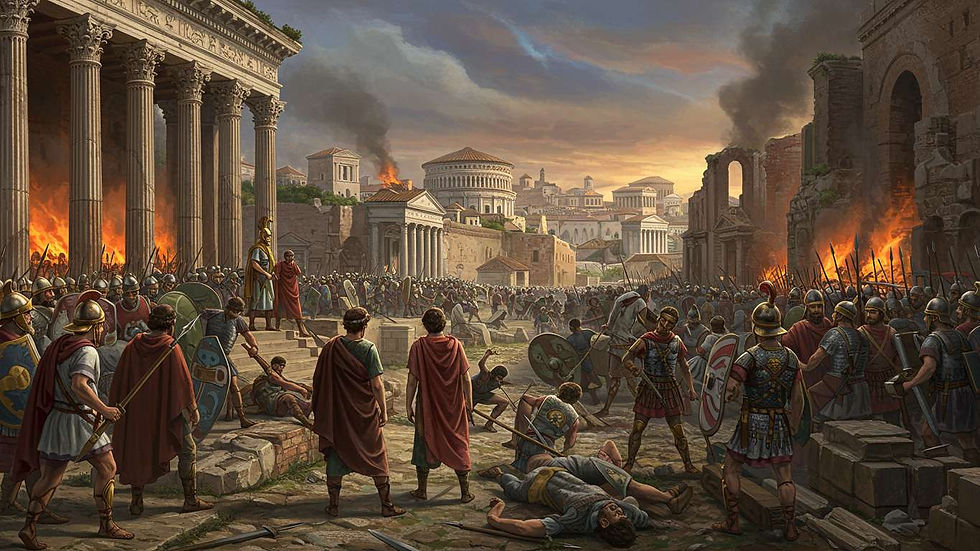
随后,中欧几乎同时进入低谷期。中国经历三国、两晋与南北朝的长期分裂;欧洲则随着西罗马帝国的灭亡进入中世纪早期。但关键分岔由此出现:中国的分裂被视为暂时状态,社会始终默认“天下终将再统一”;而欧洲逐渐接受多国并存成为常态。这种对“统一”的不同预期,埋下了深远影响。
Both regions then entered periods of fragmentation. China went through the Three Kingdoms, the Jin, and the Northern and Southern Dynasties. Europe experienced the fall of the Western Roman Empire and the onset of the early Middle Ages. Yet a crucial divergence emerged. In China, division was seen as temporary—reunification was always expected. In Europe, fragmentation became the norm, and a multi-state system was gradually accepted. This difference in assumptions would echo for centuries.
三、中国率先到达“技术与治理高峰”(600—1200年)
China Reaches an Early Peak of Technology and Governance (600 – 1200)
唐宋时期,中国站上世界文明高点。造纸术、印刷术、指南针与火药雏形出现,城市经济与商业高度发达,科举与官僚体系成熟,并通过丝绸之路与海上贸易深度嵌入欧亚网络。与此同时,欧洲仍在缓慢复苏,知识主要由修道院保存,城市与商业刚刚起步,许多技术需经伊斯兰世界传入。站在公元1100年回望世界,未来似乎属于中国。

During the Tang and Song dynasties, China reached an early global peak. Paper, printing, the compass, and early gunpowder emerged; cities and commerce flourished; and a merit-based bureaucratic system matured. China was deeply integrated into Eurasian trade networks by land and sea. Europe, by contrast, was still rebuilding—preserving knowledge in monasteries, slowly reviving cities, and importing many technologies via the Islamic world. From the vantage point of 1100, the future seemed to belong to China.
四、一个主动收缩,一个被迫出海(1200—1500年)
One Turns Inward, the Other Is Forced Outward (1200 – 1500)
蒙古帝国短暂地把欧亚大陆连成整体,形成一次“提前发生的全球化”。其后,中欧选择了不同方向。中国在郑和下西洋后主动收缩,国家安全与财政重心回归内部;欧洲则因奥斯曼帝国阻断传统商路,被迫向海洋寻找出路,最终开启大航海时代。这并非智慧高低之分,而是环境所逼。
The Mongol Empire briefly connected Eurasia in an early form of globalization. Afterward, paths diverged. China launched Zheng He’s great voyages but then chose to halt maritime expansion and refocus inward. Europe, blocked from eastern trade routes by the Ottoman Empire, was forced toward the seas, eventually initiating the Age of Exploration. This divergence was driven less by choice than by circumstance.
五、决定性转折:工业革命(1700—1800年)
The Decisive Turning Point: The Industrial Revolution (1700 – 1800)
工业革命是最关键的转折。欧洲完成科学革命并进入工业化,生产力、武器、金融与航运全面跃升,世界首次被纳入统一体系。中国仍是高度成熟的农业—官僚帝国,技术先进却未走向机械化工业,对外部变化反应迟缓。从此,中欧差距由阶段性转为结构性。
The Industrial Revolution marked the decisive turning point. Europe underwent scientific and industrial revolutions, unleashing explosive growth in productivity, weaponry, finance, and transportation. China remained a sophisticated agrarian-bureaucratic empire, technologically capable but lacking industrial systems. From this moment, the gap became structural rather than cyclical.
六、近代的碰撞与代价(1800—1945年)
Collision and Cost: A Turbulent Century for Both Civilizations (1800 – 1945)
19世纪至二战结束,是中国付出巨大代价的时期:外来侵略、内乱频仍、艰难转型。欧洲则一边主导全球体系,一边在内部自我消耗,最终通过两次世界大战摧毁“欧洲中心”。1945年,中欧在同一年迎来历史节点,旧秩序同时崩塌。
From the 19th century to 1945, China endured invasion, internal turmoil, and painful modernization. Europe dominated the global system but then turned inward, nearly destroying itself through two world wars. In 1945, both civilizations reached a turning point as old orders collapsed.
七、站在2025年回看:真正的结论
Looking Back from 2025: What Does It All Really Mean?
中国的优势在于长期稳定与整合吸收,欧洲的优势在于不断试错与制度突变。一个擅长“活得很久”,一个擅长在危机中“突然跃迁”。这不是高低之分,而是文明性格的不同。
China’s strength lies in long-term stability and integration; Europe’s strength lies in experimentation and institutional leaps. One excels at endurance, the other at reinvention. These are differences in civilizational temperament, not rankings.
结语|站在2025年年尾的提醒
Final Reflections: What These Two Timelines Still Teach Us
历史没有结束,也不会停止。未来不属于跑得最快的人,而属于能在变化中调整方向却不崩塌的人。理解历史,不是为了站队,而是为了在下一条时间轴上走得更清醒。
History has not ended—and it never will. The future will not belong to those who move fastest, but to those who adapt without breaking. Understanding the past does not give certainty, but it offers clarity—and that is where the next chapter begins.


Comments